
Following the science from Paris to Belém: outcomes of COP30
The Belém Package, the Just Transition Mechanism, the call to triple adaptation finance by 2035 and the Tropical Forests Forever Facility. A practitioner's read of what COP30 delivered, and what it left open.
Kartik Ranjan · Founder & Principal ConsultantThe 2025 United Nations Climate Change Conference, COP30, was held in Belém, Brazil, from 10 to 21 November 2025. Commentators read the overall outcome as weak, because consensus on a fossil fuel phase-out proved out of reach. Despite this contention, I congratulate the COP30 president, André Corrêa do Lago, for the eleventh-hour diplomacy. The conference text agreed to triple climate adaptation finance by 2035, without clarity on who pays; established the Just Transition Mechanism (JTM) to make the shift to a low-carbon economy inclusive and equitable; and adopted 59 global indicators for tracking adaptation progress, none of them binding.
59 global indicators, non-binding.
The Belém Package adopted 59 Belém Adaptation Indicators for tracking progress against the UAE Framework for Global Climate Resilience, alongside a commitment to triple adaptation finance by 2035, without clarity on who pays. Source: UNFCCC, COP30 decision on the global goal on adaptation, Belém, 21 November 2025.
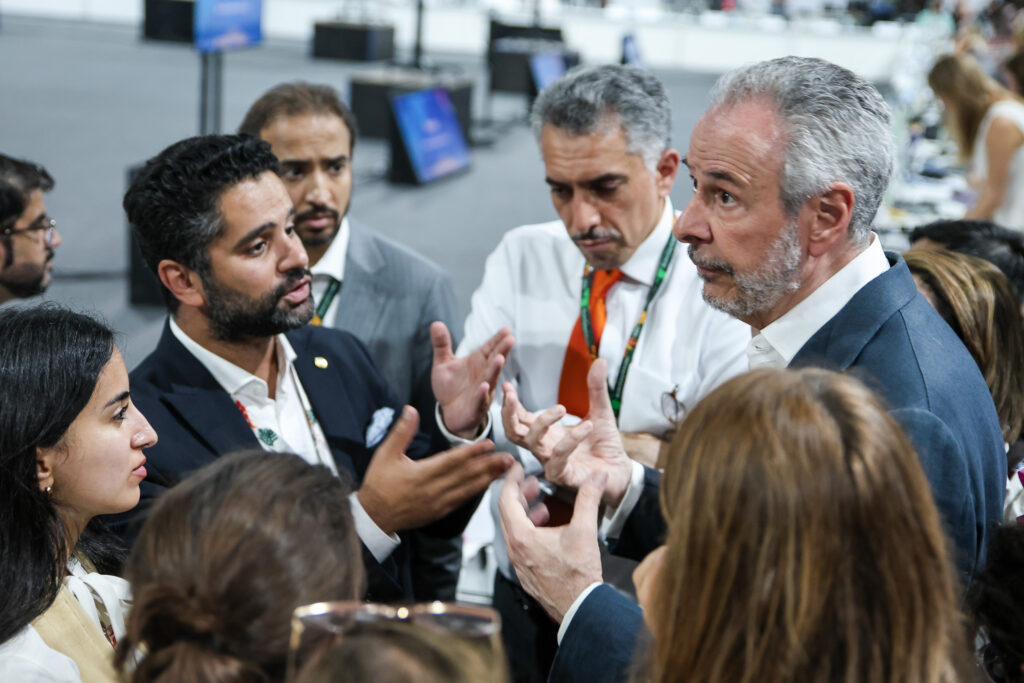
COP30 launched the idea of “Global Mutirão”, meaning collective effort, as a call for humanity to unite against climate change, shifting from negotiation to implementation. It adopted the Belém Package as a single consensus text integrating mitigation, adaptation, finance, trade and implementation. It was also the first time a COP acknowledged that 1.5°C is likely to be overshot.
On mitigation and ambition, the COP failed to agree language on reversing deforestation in the final decision. Instead the president announced two voluntary roadmaps, on fossil fuels and on deforestation, outside the formal UNFCCC process, which the presidency planned to present at COP31 (Antalya, Türkiye, 9 to 20 November 2026). The Global Implementation Accelerator (GIA), a voluntary presidency-led initiative to speed up delivery of NDCs and National Adaptation Plans, was launched alongside them.
Parties agreed to triple adaptation finance by 2035, short of the least developed countries’ demand to triple by 2030. The stalemate over National Adaptation Plans ended, though financing remains the constraint on the NAP process. There was agreement on a two-year work programme on Article 9 of the Paris Agreement covering both the provision and the mobilisation of finance, without a clear focus on Article 9.1, which puts the obligation to provide finance on developed countries. The Veredas dialogue, which aligns financial flows with climate goals under Article 2.1c, continues to 2028.
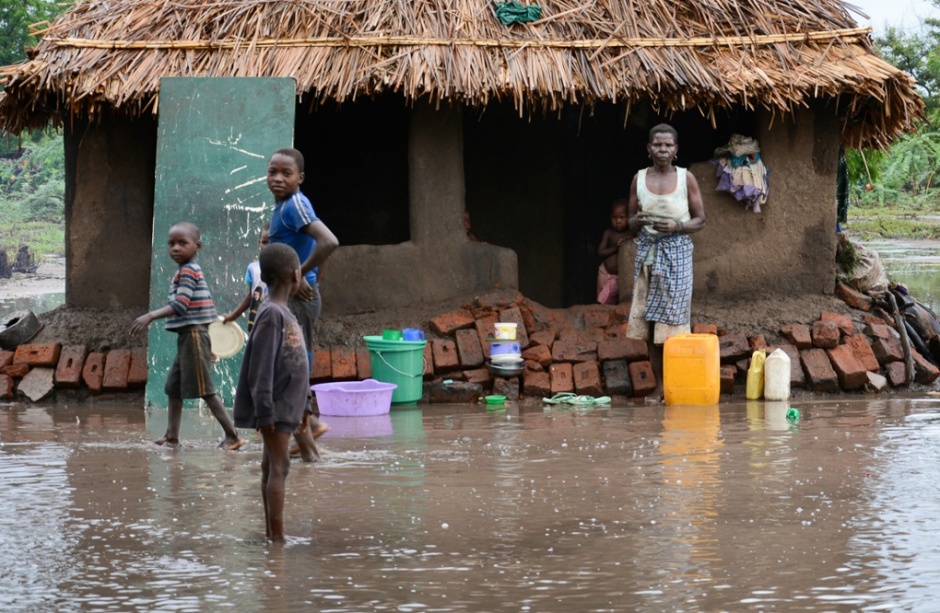
“There is no Planet B” served as the wake-up call for Global Mutirão. The year’s structural addition is the JTM, a new UNFCCC mechanism focused on international cooperation, technical assistance, capacity building and knowledge sharing. Its process was to be developed by March 2026 and considered for operationalisation at COP31.
COP30 made deliberate efforts to widen its reach. It strengthened the role of indigenous peoples and local communities, with explicit recognition of land rights and traditional knowledge in the decisions. It adopted a new Gender Action Plan for gender-responsive decision making. Green inclusive jobs and green industrial policy moved to the centre of the discussion with the launch of the Global Initiative on Jobs and Skills for the New Economy and the Belém Declaration on Global Green Industrialisation.
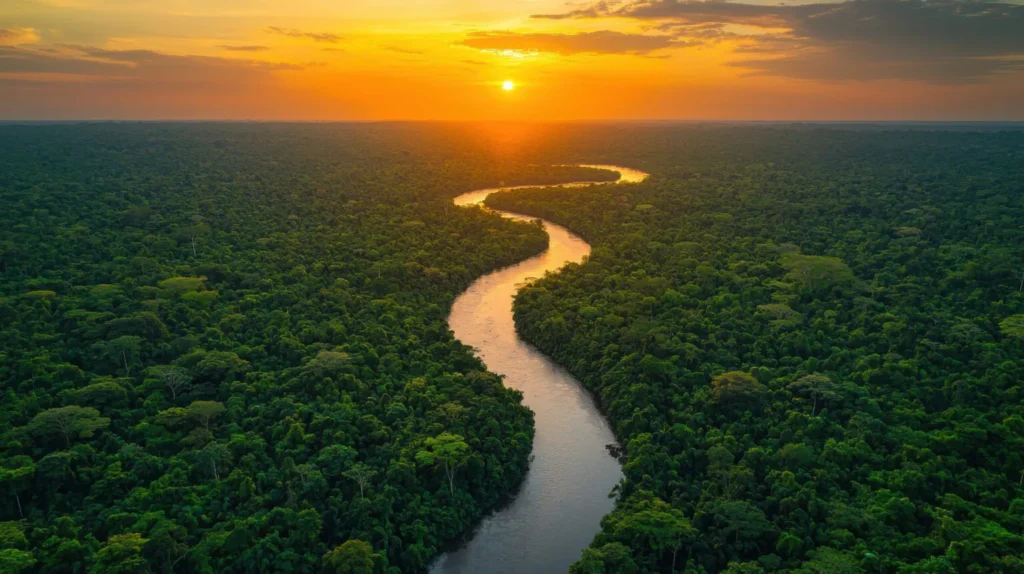
Hosted in Brazil, home to the magnificent Amazonia, this COP set the perfect stage for the launch of the flagship long-term finance facility called the Tropical Forests Forever Facility. Over USD 5.5 billion was announced at the launch declaration on 6 November 2025, endorsed by 53 countries; by the close of the conference the facility reported over USD 6.7 billion in announced contributions and 66 endorsements, from Norway, Germany, Brazil, Indonesia, France, the Netherlands and Portugal. Both figures sit against a stated fundraising target of USD 125 billion. Scaling sustainable investment in forests, regenerative agriculture and bio-industrialisation also gained ground, and interest in green hydrogen and its derivatives is building, with Algeria, Japan and India among the countries showing promise.
Over USD 6.7 billion announced, against a USD 125 billion target.
Announced contributions to the Tropical Forests Forever Facility. Over USD 5.5 billion was announced at the launch declaration of 6 November 2025 with 53 country endorsements; by the close of the conference the facility put the total above USD 6.7 billion with 66 endorsements. These are announced contributions, not received capital, and the facility’s own stated target is USD 125 billion. Sources: COP30 Presidency, 6 November 2025; TFFF, 27 November 2025.
The COP of implementation produced its share of highlights. South Korea committed to phasing out coal completely by 2040 and joined the Powering Past Coal Alliance. Mission Efficiency launched the Plan to Accelerate Doubling Energy Efficiency, aimed at the COP28 goal of doubling energy efficiency by 2030. The Technology Implementation Programme was adopted with a timeline for strengthening implementation in developing countries. The Greenhouse Gas Protocol and ISO were reaffirmed as the foundation of the global carbon-accounting system.
All of this has to be read against the United States pulling out of the negotiations. Certainly, the “Renewables revolution is here”. And yet, as UN Secretary-General António Guterres put it, “the gap between where we are and what science demands remains dangerously wide”. The United States sat outside the process while remaining the second-largest emitter of fossil CO2, at about 13% of the global total, behind China at 32% and ahead of India at 8% Carbon Brief, reading the Global Carbon Budget 2025. The same budget projects 38.1 billion tonnes of fossil CO2 for 2025, a record. Against a goal of mobilising USD 1.3 trillion a year for developing countries by 2035, COP30 secured a small fraction.
USD 1.3 trillion a year by 2035.
The climate finance mobilisation goal for developing countries, carried from the New Collective Quantified Goal into the Baku to Belém Roadmap. COP30 secured a small fraction of it. The United States, the second-largest emitter of fossil CO2 at about 13% of the global total, sat outside the negotiations. Sources: UNFCCC; Carbon Brief on the Global Carbon Budget 2025, for the national shares. The 2025 emissions figures behind those shares are projections for the year, not a closed-year count.
India, as a voice of the Global South, argued that a rules-based multilateral framework is essential, and thanked the presidency for creating space to discuss unilateral trade-restrictive climate measures. Those measures affect all developing countries and cut against the principles of equity and CBDR-RC. India also noted the standing obligation on developed countries to provide climate finance and welcomed the focus on Article 9.1 of the Paris Agreement.
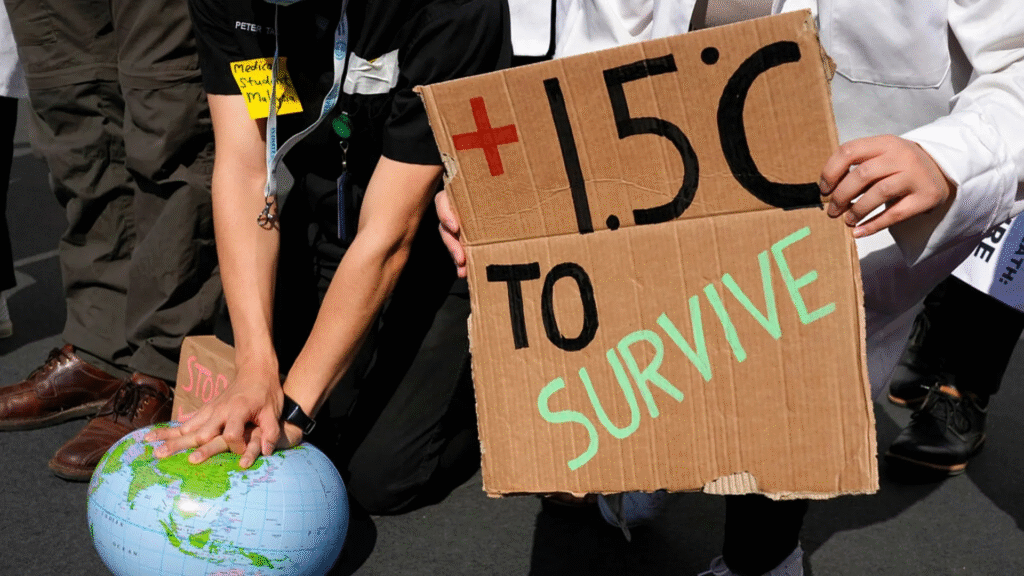
“Implementation, Implementation, Implementation” was the war cry, ten years after the Paris Agreement at COP21. Obama was right when he said, “We are the first generation to feel the full effects of climate change, and the last generation that can do something about it.” The right time to act was yesterday! Let’s unite now and do something about it.
UNFCCC, COP30 decisions and the Belém Package, Belém, 10 to 21 November 2025 · COP30 Presidency, Over USD 5.5 billion announced for the Tropical Forest Forever Facility as 53 countries endorse the launch declaration, 6 November 2025 · TFFF, COP30 ends with over US$ 6.7 billion for the TFFF, 27 November 2025, which carries the close-of-conference total and the 66 endorsing countries · Global Carbon Budget 2025, fossil fuel CO2 emissions hit record high in 2025, published 13 November 2025 · Carbon Brief, analysis of the Global Carbon Budget 2025, 13 November 2025, which states the national shares of global fossil CO2 emissions · UNFCCC, New Collective Quantified Goal on climate finance and the Baku to Belém Roadmap to 1.3T