
The cost of climate change: India's mounting climate bill
Urban heat, urban flooding, GDP losses and the resilience investment India has to make. What the published numbers say, and what they leave out.
Kartik Ranjan · Founder & Principal Consultant“This year there was trouble,” claimed Bhumia, an adivasi woman from Malkangiri, Odisha. Bhumia often moved closer to the coast during the monsoon season. She observed with fear that “the sea raged and climbed higher than last year”, forcing her to move her temporary shelter farther inland. This directly reduced her chances of fishing. At the same time, over 1500 km away, Junaid in Ahmedabad, Gujarat, faced severe hardship due to a heatwave in the region. “Now I have fewer days available to earn wages,” he said. Meanwhile, in Munnar, Kerala, floods ravaged the landscape, destroying tea plantations, agricultural produce, and makeshift homes. Susanna prayed to the heavens for some relief as she saw her season’s entire harvest being carried away by the storm surge. Similarly, many more stories remain unheard of every year when climate extremes wreak havoc across our country.
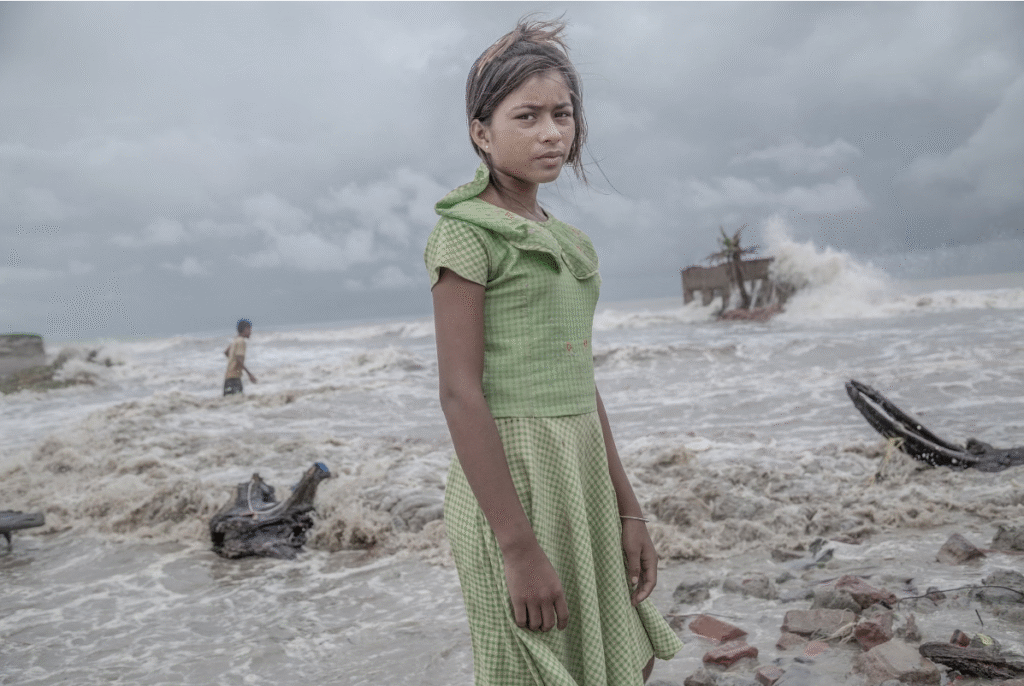
Urban India held about 35% of the country’s population in 2020, around 480 million people, and the World Bank projects that number to nearly double to 951 million by 2050 on a moderate urbanisation scenario, in which 54% of Indians live in cities by 2050 World Bank, July 2025. Three consequences follow.
First, heat. The expansion of concrete jungles intensifies the urban heat island effect, raising micro-temperatures by 3–4°C. The World Bank puts the prize from heat mitigation across Indian cities at up to 0.4% of GDP and up to 130,000 lives a year saved by 2050. Second, water. The mixing of sewage and drinking water during incessant rainfall drives vector-borne disease, whose correlation with seasonality is documented Sophia, Y., Roxy, M.K., Murtugudde, R. et al. (2025), and puts the potable supply under stress. Losses from stormwater flooding in Indian cities run at about $4 billion a year, on the World Bank’s estimate, and are expected to reach $5 billion by 2030 and $14 billion to $30 billion by 2070 if no remedial action is taken. The report says timely action can help avert large potential impacts. Third, the street. Diminishing green space and lethal air pollution push people indoors, which is a mental-health cost nobody bills for. The boom of quick-commerce in urban India is thus not a fluke; it showcases an Aapda mein Avsar (opportunity in crisis), providing a practical response to these urban challenges.
Supply chains that make businesses viable are disrupted, and service costs rise with them. The absence of climate-resilient urban infrastructure eats hours from school students, white-collar professionals and anyone doing the week’s shopping. Extreme heat alone cost India about $159 billion of income in 2021, equal to 5.4% of GDP, across services, manufacturing, agriculture and construction The Hindu.
An earlier version of this piece described the $159 billion as GDP lost to all climate impacts in 2021.
The figure is income lost to extreme heat in 2021 across four sectors (services, manufacturing, agriculture and construction). The Climate Transparency Report 2022, which the cited article reports, expresses that loss as 5.4 per cent of GDP. The sentence above has been corrected.
5.4% of GDP, about $159 billion.
India’s estimated income loss from extreme heat in 2021. The figure is a study estimate of foregone income across four heat-exposed sectors, not a measured national account, which is why it carries a modelled label. Source: The Hindu, reporting the underlying study.
The urban poor and marginalised groups take amplified damage, because social vulnerability compounds it and their capacity to offset risk is limited Khosla and Bhardwaj, 2019. Statistics show that India recorded 252 heatwave-related deaths in 2023! Economic Times, 17 July 2024. Read that as a reported count, not a measure of the full toll: the World Bank models heat-related deaths in India’s cities at about 144,000 a year, rising to 328,500 by 2050 under a high-emissions scenario. The bottom strata face a double hit of out-of-pocket expenditure, which behaves like a climate tax, and non-economic loss. Forced migration cuts participation in local traditions and customs, which weakens social capital and cultural identity, and it breaks joint families into smaller units scattered across cities. The recent restructuring of urban households into nuclear units is not a coincidence.
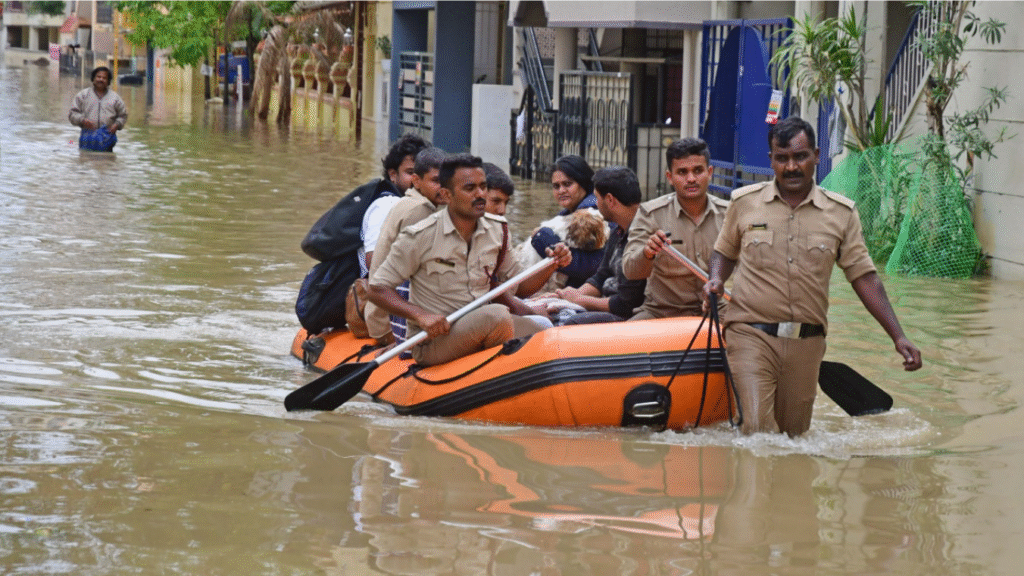
This reality makes urban landscapes unaffordable, unhealthy and unsafe. This reality makes urban living unlivable. The crores of Indians who depend on agriculture face the same bill in a different currency. More drought days and more flash floods pincer crop production: a 1°C rise in temperature is estimated to reduce rice production by 4 to 20 per cent CEEW, 2015, a range drawn from the literature rather than a single measured yield response. Small farmers are pushed further into extreme poverty. Those with capital to replace top soil lost to climate extremes use larger quantities of fertilisers, and the chemicals leach into the aquifer. That poisons the population slowly and loads an already burdened healthcare system. It is also bad economics: a systemic financial sink for taxpayers’ money.
India’s ambition to become Viksit Bharat by 2047 is anchored in inclusive and sustainable development Economic Survey 2024-25. Realising it means treating the losses above as a line item rather than as weather. This shift in perspective is crucial to not only raise awareness in mission mode but enhance our understanding of Human-Nature interaction on more than one level.
Climate change has to be handled as an urgent and collective problem. The education system can lead on mainstreaming sustainability: energy-efficient buildings, green space (Miyawaki plantings are one route), circular-economy principles in ordinary life. Policymakers have to participate too, and the priority is inclusivity, so that people currently without a voice become active players with access to adaptation resources.
India, per capita, does not generate carbon of the order Europe does, because it is still a developing nation. The right approach is not to stunt development but to build climate-sensitive budgeting into urban planning. India’s development model has to carry low-carbon lifestyles and strong disaster preparedness. India must build, and build right, with long-term resilience in mind.
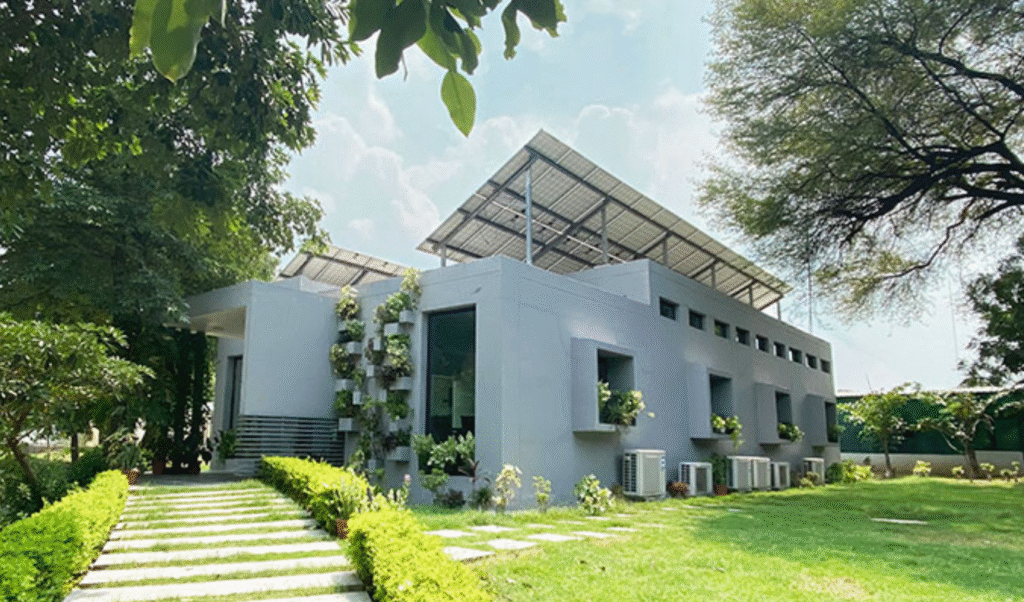
The low-hanging fruit is known: stormwater drainage sized for cloudburst rainfall, green buildings and retrofitted housing that cut both carbon and heat absorption, public transport that keeps running in extreme weather, and nature-based solutions such as urban forests, permeable pavements and restored wetlands, along the lines of HYDRAA’s work in Hyderabad. Together they can make for an effective action plan.
Doing it needs investment of about $2.4 trillion by 2050 in climate-resilient urban infrastructure, on the World Bank’s conservative urbanisation scenario, and $10.9 trillion by 2070 World Bank Group, Towards Resilient and Prosperous Cities in India, 2025. A number that size invites creativity in financing. Belize’s debt-for-nature swap and Fiji’s parametric insurance instruments for government, tourism and the environment are two examples of countries finding alternatives for loss and damage UNDRR. National programmes such as the Smart Cities Mission would benefit from carrying instruments of that kind.
$2.4 trillion by 2050.
The World Bank’s projected investment need for new resilient and green urban infrastructure in India by 2050, from Towards Resilient and Prosperous Cities in India, 2025. It is scenario output, not a measured requirement: $2.4 trillion holds under the report’s conservative urbanisation scenario (43 per cent urban by 2050) and $2.8 trillion under its moderate scenario (54 per cent). Source: World Bank Group, Towards Resilient and Prosperous Cities in India, executive summary.
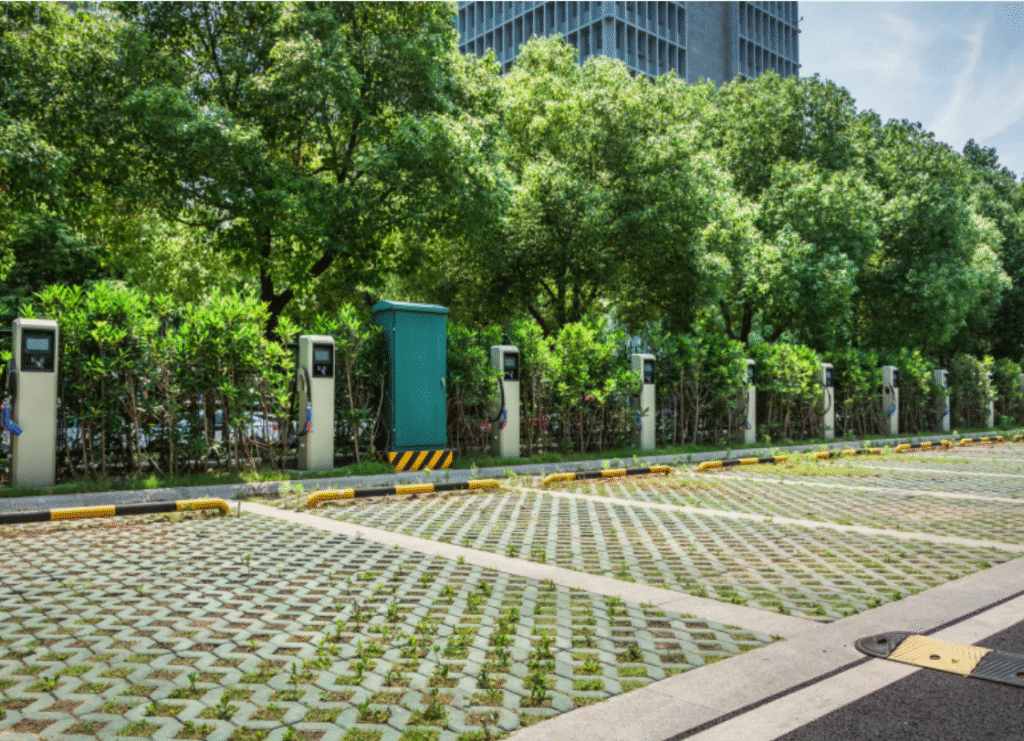
India already offers success stories to copy. The Ahmedabad Heat Action Plan, India’s first, is associated with an estimated 1,190 avoided deaths a year in 2014 and 2015, against a 2007 to 2010 baseline Hess et al., 2018. In Kochi, the Integrated Urban Regeneration and Water Transport System replaced carbon-emitting road transport with solar-powered water ferries, cutting emissions and congestion together. In Pune, green roofs and permeable parking lots regulated temperatures and reduced waterlogging. The Amrita Center deployed AI-enabled wireless sensor networks for landslide monitoring and early warning in Munnar, Kerala, which won the Averted Disaster Award in 2023.
About 1,190 deaths avoided a year.
The estimated annual deaths avoided in Ahmedabad in 2014 and 2015, after the city’s Heat Action Plan, against a 2007 to 2010 baseline. It is a before-and-after model estimate with a wide range (95% confidence interval 162 to 2,218), not a count. Source: Hess et al., Journal of Environmental and Public Health, 2018.
Under the leadership of PM Modi, it is critical that we adopt the One Health approach, and with it, recognize the interconnectedness of human, animal, and environmental health. This will guide us to prevent, detect, and respond to threats to human wellbeing and to Mother Nature. We are no more silent spectators of the mayhem and madness of an unsafe planet, changing our lives season after season, we are active participants to it. In the current moment of the Anthropocene, it’s essential to account for the Gray and follow it by adaptation and mitigation investments towards the green. A Viksit Bharat must rise to the challenge and be prepared to navigate through it.
World Bank, Towards Resilient and Prosperous Cities in India, 22 July 2025 · The Hindu, on India's 2021 income loss from extreme heat · CEEW, The Costs of Climate Change Impacts for India, Vaibhav Chaturvedi, March 2015, which carries the 4 to 20 per cent rice-yield sensitivity per degree of warming · Sophia, Y., Roxy, M.K., Murtugudde, R. et al., Dengue dynamics, predictions, and future increase under changing monsoon climate in India, Scientific Reports, 21 January 2025 · Economic Times Energyworld, Economic costs of climate change in India and policy responses, 17 July 2024, for the 2023 heatwave mortality count · Reuters, Indian cities need $2.4 trillion climate infrastructure by 2050, World Bank says, 22 July 2025. Reuters restricts automated access, so the World Bank report above is the primary reference for that figure · Economic Survey 2024-25, Press Information Bureau release · UNDRR and ODI, Financial arrangements for addressing losses and damages: a disaster risk reduction primer, December 2023, on Belize's debt-for-nature swap and Fiji's parametric insurance · Averted Disaster Award, 2023 winner, Amrita Center for Wireless Networks and Applications, 18 October 2023 · Khosla, R. and Bhardwaj, A., 2019, cited in the text on social vulnerability · Hess, J.J. et al., Building resilience to climate change: pilot evaluation of the impact of India's first heat action plan on all-cause mortality, Journal of Environmental and Public Health, 2018